The best way to collect rent is one your residents find easy to use and you can track without extra work. In California, it also has to fit state law. Landlords generally must offer at least one way to pay that isn’t cash or an electronic transfer, so you can’t require rent to be paid only in cash or only online.
Whether you self-manage a duplex in Chico or own a fourplex in Redding or Greater Sacramento while living out of the area, your method affects three things: how much time you spend on rent each month, how clean your records are at tax time, and how easily residents can pay on time. This guide compares the five most common rent payment methods, explains California’s payment-method rule in plain terms, and ends with a checklist to help you choose.
What's the Best Way to Collect Rent?
For most rental owners, the best way to collect rent is a consistent, written process that gives residents an easy electronic option, keeps a record of every payment, and still accepts at least one non-electronic method, such as a check. The method matters less than the system around it: the same due date, the same instructions, and the same record for every payment, every month.
There are five common ways to collect rent, and each has a place. Below, we compare all five side by side, then cover California’s rule on requiring online payment, advice for owners who live far from their rental, and a step-by-step checklist. Everything here is written for California rental owners.
How Do Landlords Collect Rent? Comparing the Main Options
Landlords usually collect rent in one of five ways: in person, by mailed check or money order, through a payment app, by automatic bank draft, or through an online payment portal. Each one trades off convenience, cost, and record-keeping differently. If you’re looking for the best way to collect rent electronically, compare the last three: payment apps, bank drafts, and online portals.
| Method |
Cost to the owner |
Monthly effort |
Record-keeping |
Fit for remote owners |
| In person |
Little beyond your time |
High: a meeting every month |
Manual; a receipt each time |
Poor |
| Check or money order by mail |
Little beyond deposit trips |
Moderate: deposit and log each check |
Manual ledger |
Good, with a reliable address |
| Payment app |
Varies by app; check the terms |
Low |
App history you export |
Fair; bank transfers can take days |
| Automatic bank draft (ACH) |
Varies by bank or service |
Low after setup |
Strong; shows on bank statements |
Good |
| Online payment portal |
Varies by platform |
Low |
Strong; history in one place |
Good |
Fees depend on the provider, so check current terms before you commit. Here's a closer look at each method.
In Person
In-person collection suits owners who live near their rental. You meet at a set time each month, take the payment, and talk through any concerns face to face. That contact can support a good relationship with your resident.
The limits are real. You need a meeting every month for every unit. You also carry cash or checks until you deposit them, which adds the risk of loss or theft. Write a dated receipt for every payment, especially cash.
Check or Money Order by Mail
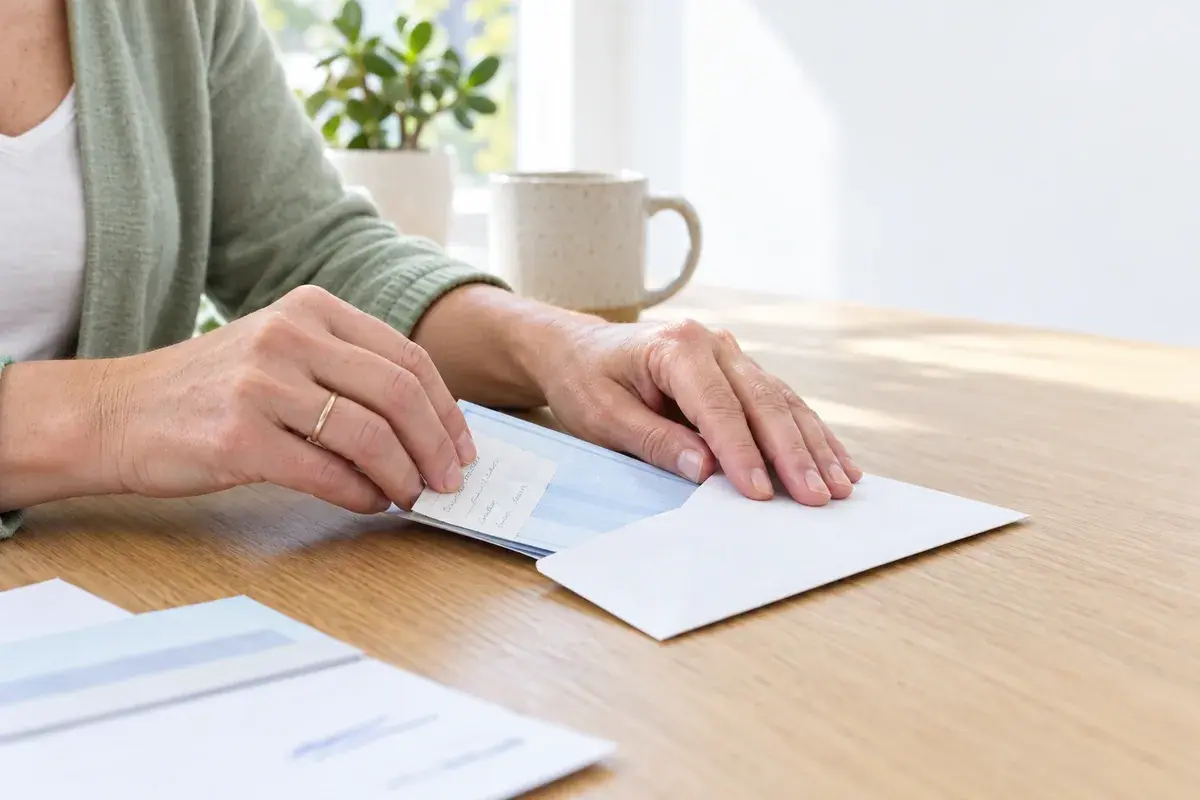
A mailed check or money order is the most common non-electronic option. In California, it’s often the method residents rely on when they’d rather not pay online. Put a clear mailing address and payment instructions in the lease, including who the check should be made out to.
Expect some lag. Mail can be delayed, and you still have to deposit each check before the money is available. Log every payment in a simple ledger with the date received, the amount, and the check number.
Payment Apps Like PayPal, Venmo and Zelle
Apps such as PayPal, Venmo, and Zelle let residents send rent from a phone in seconds. They're quick and familiar, and they keep a payment history. Weigh the trade-offs before you rely on one:
- Terms and fees: Each app sets its own rules and fees for rental payments, so read them before you share your account details.
- Hard to reverse: Payments usually can't be pulled back, so confirm who is paying and match each payment to the right unit.
- Not bank insurance: The Consumer Financial Protection Bureau notes that money held in a payment app balance is typically not insured by the Federal Deposit Insurance Corporation (FDIC), which insures bank deposits.
- Slower transfers: For apps that hold a balance, such as PayPal and Venmo, the Federal Trade Commission notes that moving money to a bank can take days, and it advises reading the app's terms of service. Move rent to your bank promptly.
Automatic Bank Draft (ACH)
With an automatic bank draft, rent moves from the resident's bank account to yours on a set date each month through the Automated Clearing House (ACH), the network banks use to move money electronically. You'll need the resident's written authorization before the first draft.
Drafts are convenient, but they don't remove every problem. A draft can still be returned if the account is short, so follow whatever your lease says about returned payments. Every draft shows up on your bank statement, which keeps records clean for taxes and bookkeeping.
Online Rent Payment Portals
An online rent payment portal is a secure website or app where residents pay rent. For many owners, it's the best way to collect rent online. Portals are often provided by property management companies though owners can also set one up themselves.
What sets most portals apart is that everything lives in one place:
- Payment history and records for each unit
- Reminders before rent is due
- Maintenance requests and messages alongside payments
Who pays the processing fees varies by platform, so compare before you sign up. One caution: in California, a portal can't be the only way residents pay. The next section explains why.

Can You Require Tenants to Pay Rent Online in California?
Generally, no. California doesn't let a landlord make electronic payment the only way to pay rent, so residents keep at least one option that is neither cash nor electronic, such as a check or money order.
In practice, you can offer online payment, and residents who prefer it can use it. You can't make it the only choice. The same principle runs the other way. The California Department of Real Estate's tenant guide explains that a landlord generally can't require cash only, either, except in limited cases, such as after a resident's check bounces.
The guide also notes that the rental agreement should state the form in which rent is paid. Spell out in the lease how rent is paid, to whom, and where, so residents aren't guessing.
This is general information, not legal advice. Rules can change, and how they apply depends on your property and lease. Read the state's guide and check how it fits your situation before you change your payment terms.
What's the Safest Way to Collect Rent Remotely?
For most owners who live away from their rental, the safest choice is an electronic method that deposits straight into a bank account and records every payment, backed by a clear mailing address for residents who pay by check. That combination keeps money moving without anyone handling cash, and it gives you a record you can check from anywhere.
A few habits help:
- Use a bank draft or portal that deposits directly into your rental account
- Give check payers a reliable mailing address that you or someone you trust checks regularly
- Avoid cash when you can't be there to write a receipt
- Keep a written record of every payment, whatever the method
For the rest of the job, from repairs to inspections, see this guide on how to manage a rental property remotely.
How to Choose a Rent Collection Method for Your Rental
Choose based on how many units you have, how your residents prefer to pay, and how much record-keeping you want to do yourself. Then write the method into the lease. This five-step checklist walks through it:
- Count your units. One single-family rental can run on checks. A fourplex or small apartment building is easier with automation, because every manual payment adds work.
- Ask residents how they prefer to pay. A method they'll actually use beats one that only looks good on paper.
- Weigh fees and paperwork. Compare costs, how each payment is recorded, and how easily you can pull a full year of rental income at tax time.
- Keep a non-electronic option. Pair any electronic method with checks or money orders, which California generally requires.
- Write it into the lease and apply it consistently. Use the same due date, the same instructions, and the same process for every resident.

How Hignell Property Management Helps Owners With Rent Collection
With full-service management from Hignell Property Management, rent collection sits alongside leasing, maintenance, and accounting under one roof, so owners in Chico, Redding, and Greater Sacramento aren't tracking payments on their own. In short, a rental property manager handles the day-to-day work of running a rental. This guide to what a property manager does covers the details.
Hignell is a multigenerational, family-led company that has been building, managing, and maintaining North State properties since 1948. It has offices in Chico, Redding, and Roseville and in-house maintenance teams. It is a management member of the California Apartment Association and a member of the North Valley Property Owners Association. Because Hignell invests in real estate itself, it thinks like an investor when managing yours. See the full range of Hignell Property Management services.
Frequently Asked Questions About Collecting Rent
Should I give residents a receipt for rent?
Yes, especially when rent is paid in cash or in person. A dated receipt showing the amount, the date, the unit, and the period the payment covers gives you and the resident the same record. If there's ever a disagreement about whether rent was paid, that receipt protects both sides.
How do I move residents from paper checks to online payments?
Announce the change in writing and give residents time to adjust before the switch. Explain how to sign up, when the new option starts, and who to contact with questions. Keep checks or money orders available, as California generally requires, so residents who prefer paper still have a way to pay.
Should rent go into a separate bank account?
For most small owners, it's a good idea. A dedicated account keeps rental income apart from personal money. That makes it easier to track payments, spot a missing deposit, and pull your numbers at tax time. For a fuller look at what to track, see this California rental property expenses guide.
Making Rent Collection One Less Thing to Manage
No single method fits every rental. What usually works is a written, consistent process with an electronic option and a non-electronic option. Put it in the lease, keep a record of every payment, and apply it the same way every month. If you'd rather not handle rent yourself, start the conversation with a Free Rental Analysis from Hignell Property Management.